
Measure which stage is slow
Distinguish time before the login screen from time after entering the password. Booting and storage matter more in the first stage; startup applications and the user environment may matter more afterwards. Record approximate duration and consistency. One slow start after an update differs from a process that gets slower every day.
Identify the model and storage
Different iMac generations can have HDD, SSD or Fusion Drive configurations. Appearance alone cannot reliably identify them. Fusion Drive is not simply two independent user disks that can be erased or separated casually. Verify a backup before reorganising storage. Provide the model year and storage information shown by the system.
Login items and accessories
Review applications that start at login and disable only those genuinely unnecessary. Compare startup without optional external drives and USB accessories after safely disconnecting them. Do not alter work accounts or organisation-managed software without agreement. This creates a useful comparison without disrupting the normal environment.
Do not ignore drive symptoms
Read errors, long system-wide pauses or unusual mechanical-drive noises make data protection the priority. Intensive testing and repeated reinstallation are not the first response to potentially failing storage. Kmvle does not recover data from physically damaged drives. Transfer possibilities depend on the drive’s current condition.
SSD upgrades and disassembly
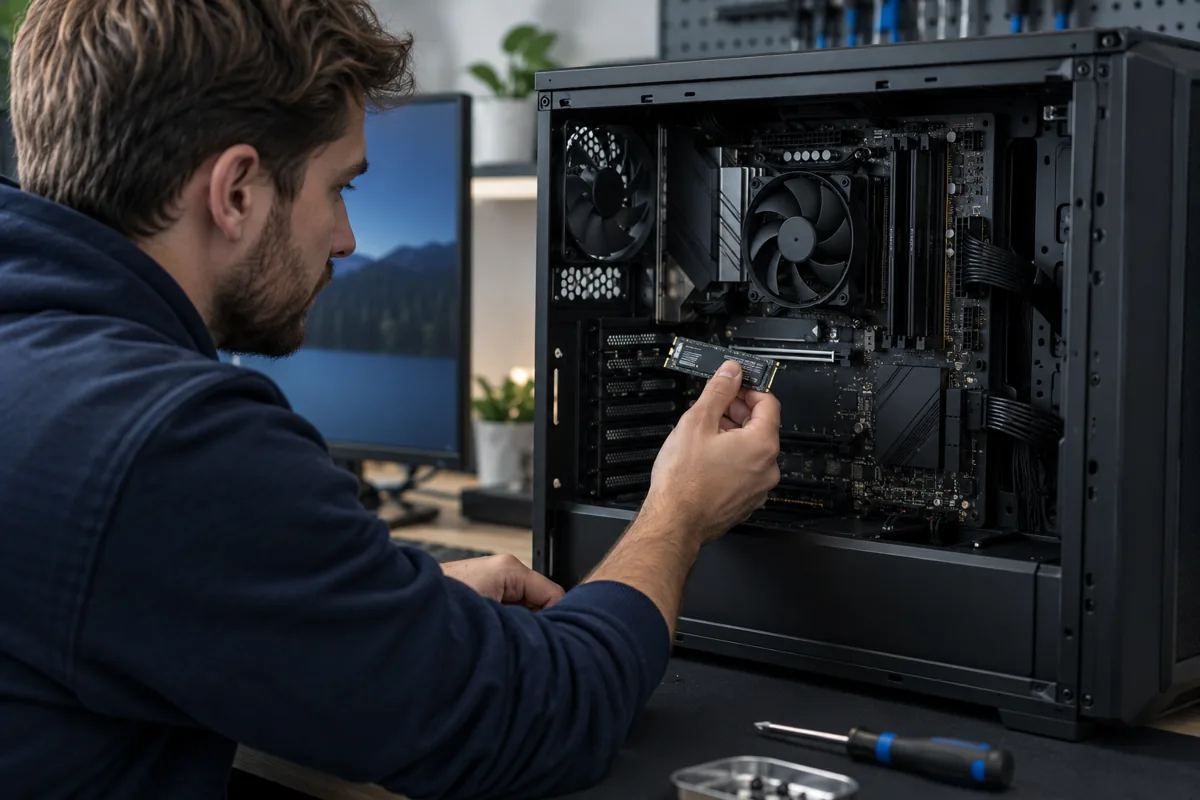
A compatible SSD can be a sensible upgrade for an older iMac, but possibilities and disassembly vary by model. Some work requires removing a bonded display, so mention existing cracks or previous repairs. System migration and the actual work are agreed beforehand. A slow-start description alone is not enough to prescribe replacement without diagnosis.
Quick checks
| Situation | What to check | What it means |
|---|---|---|
| Slow before login | Measure the boot stage | The system and storage matter. |
| Slow after login | Review login items | The user environment may create load. |
| Disk errors are present | Copy important data first | Do not begin intensive tests without a plan. |
Need help?
Describe the symptoms and share the model. We agree on the work and price before repair.