Thermal materials are different
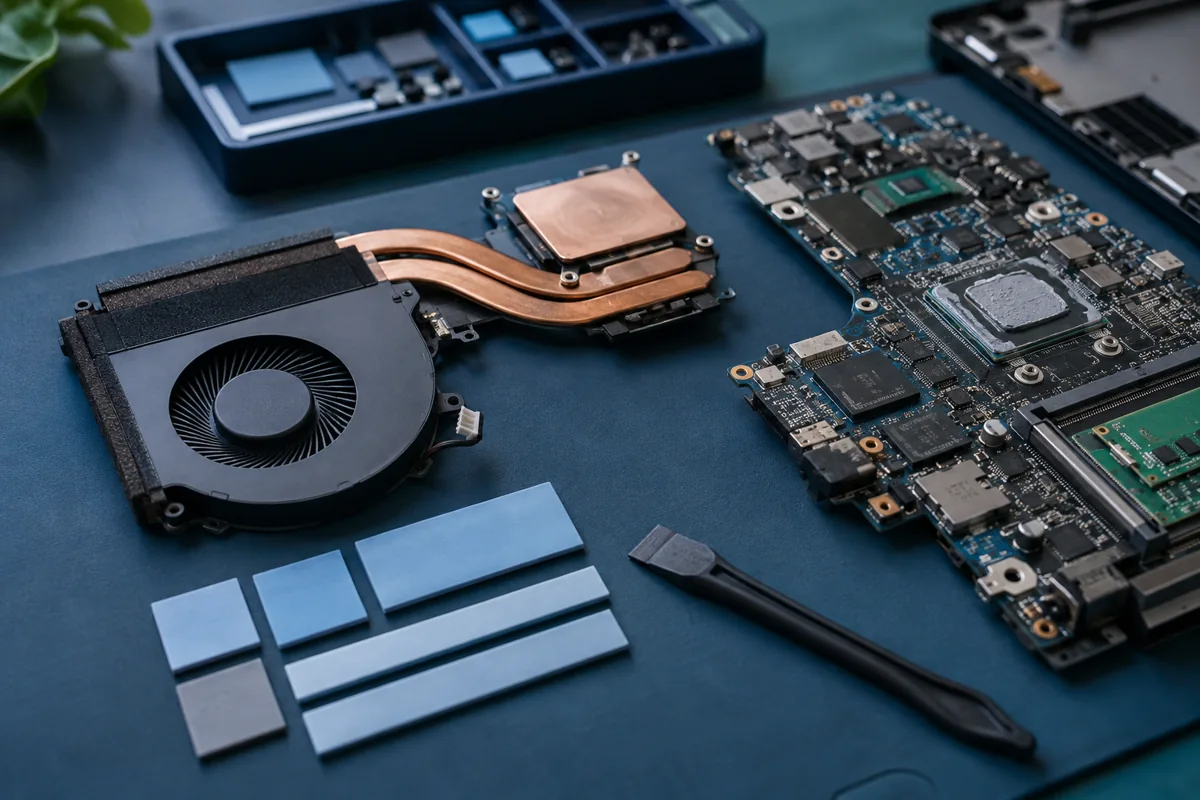
Liquid metal differs from conventional paste and phase-change materials. Many liquid-metal alloys conduct electricity, so leakage onto surrounding components can cause a short circuit. Suitability depends on the particular cooling assembly, not simply processor performance.
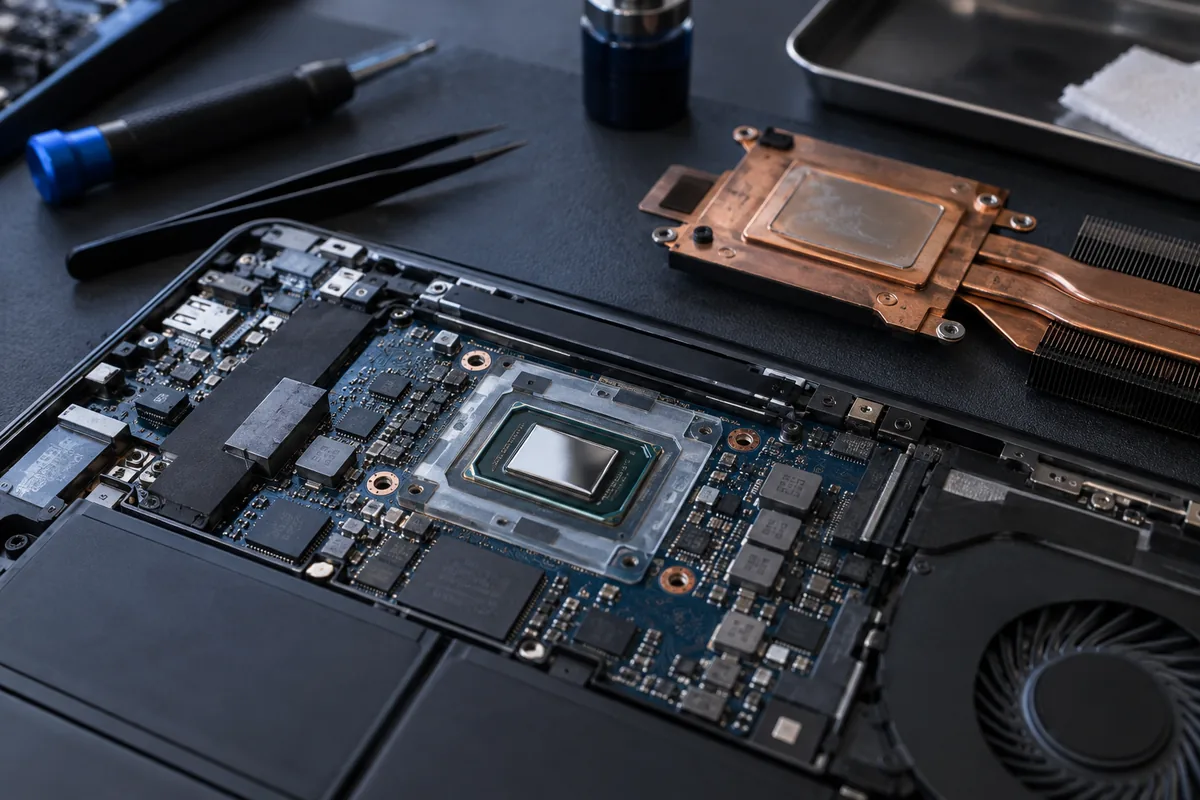
The heatsink surface matters
Material compatibility must be checked: liquid metal can damage unsuitable surfaces, particularly aluminium. A factory design may include specific barriers and seals. Its use in another gaming laptop does not establish that it suits yours.
Is a small temperature gain worth it?
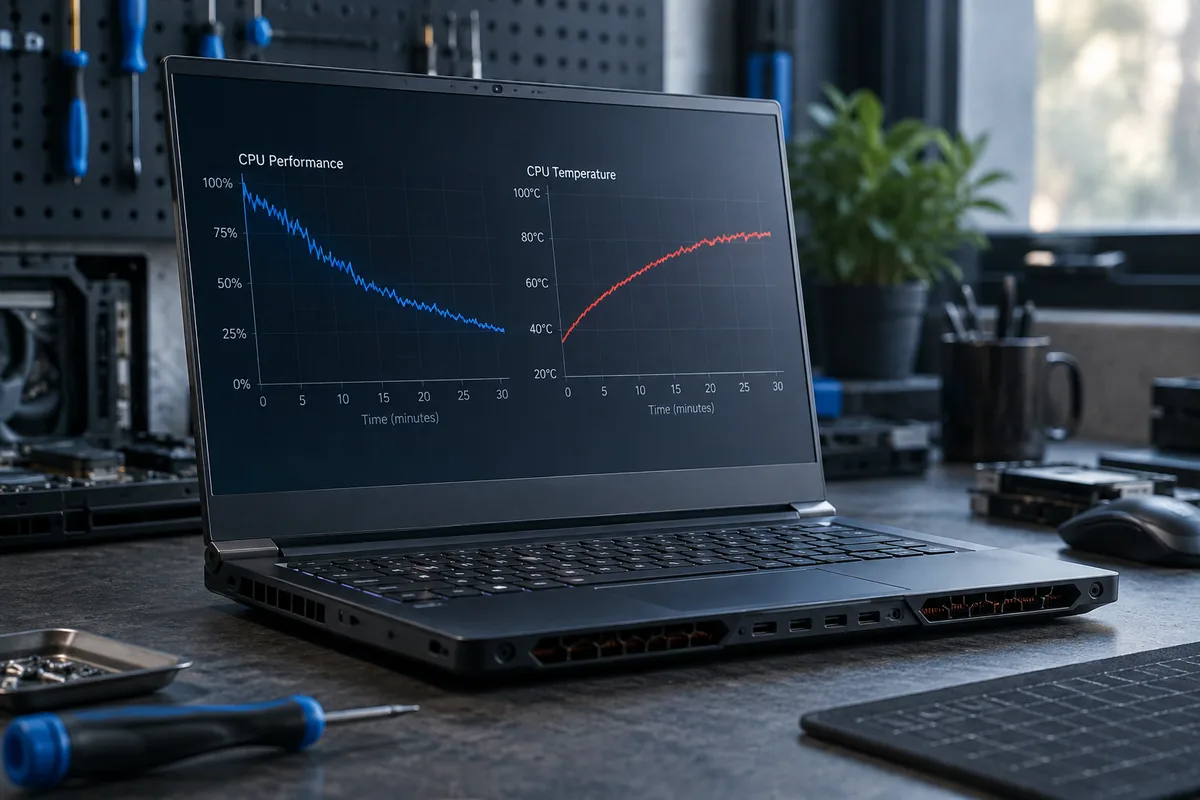
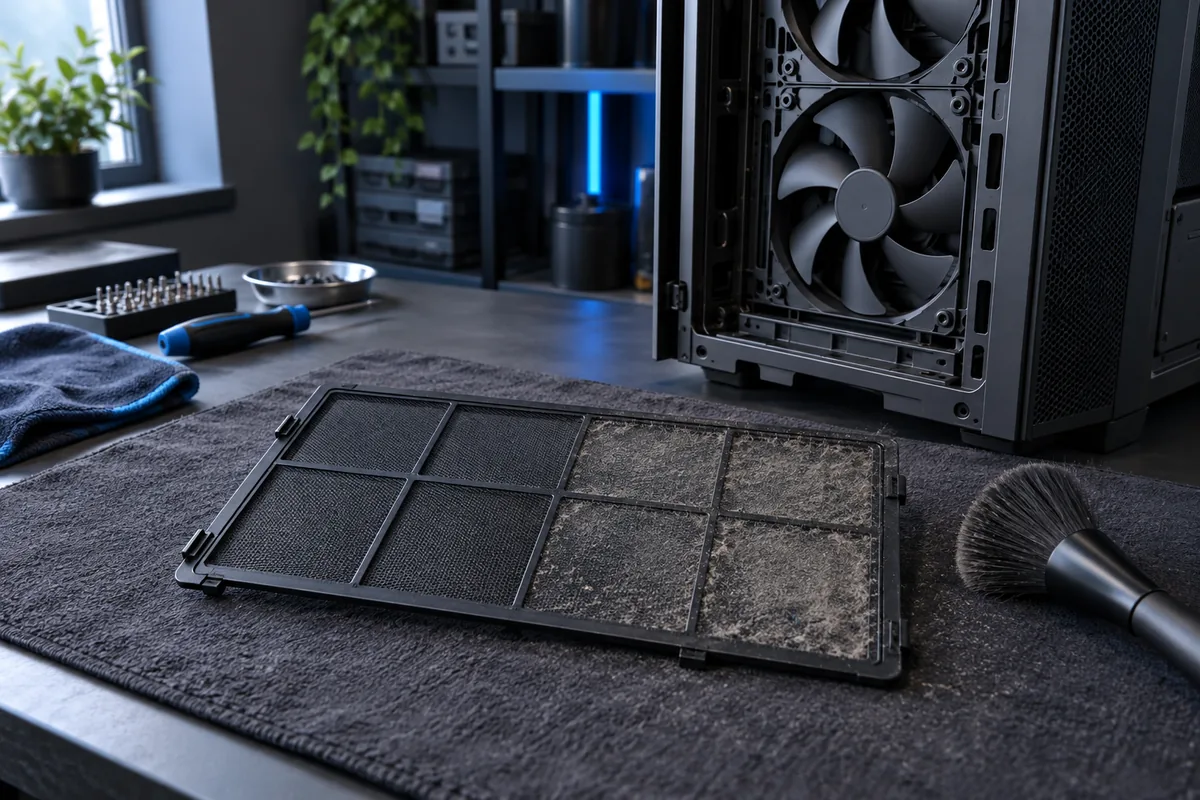
Find the cause of overheating first. Blocked fins, a failed fan and poor heatsink pressure cannot be fixed simply by changing the compound. Consider reliability, maintenance and the manufacturer's design rather than advertised thermal conductivity alone.
What to discuss with a technician
Disclose earlier cooling modifications. Agree which material will be used and whether barriers and thermal pads need renewal. Applying an electrically conductive compound without appropriate experience is risky: excess material can spread beyond the intended contact area.
Need help?
Describe the symptoms and share the model. We agree on the work and price before repair.